From the engineering desk
Edge SoC vs. NPU vs. MCU Accelerator: Choosing AI Silicon in 2026
TOPS sells chips; memory bandwidth ships products. A practitioner's framework for matching edge-AI silicon to your workload, power budget and BOM.
By Axon Labs Engineering
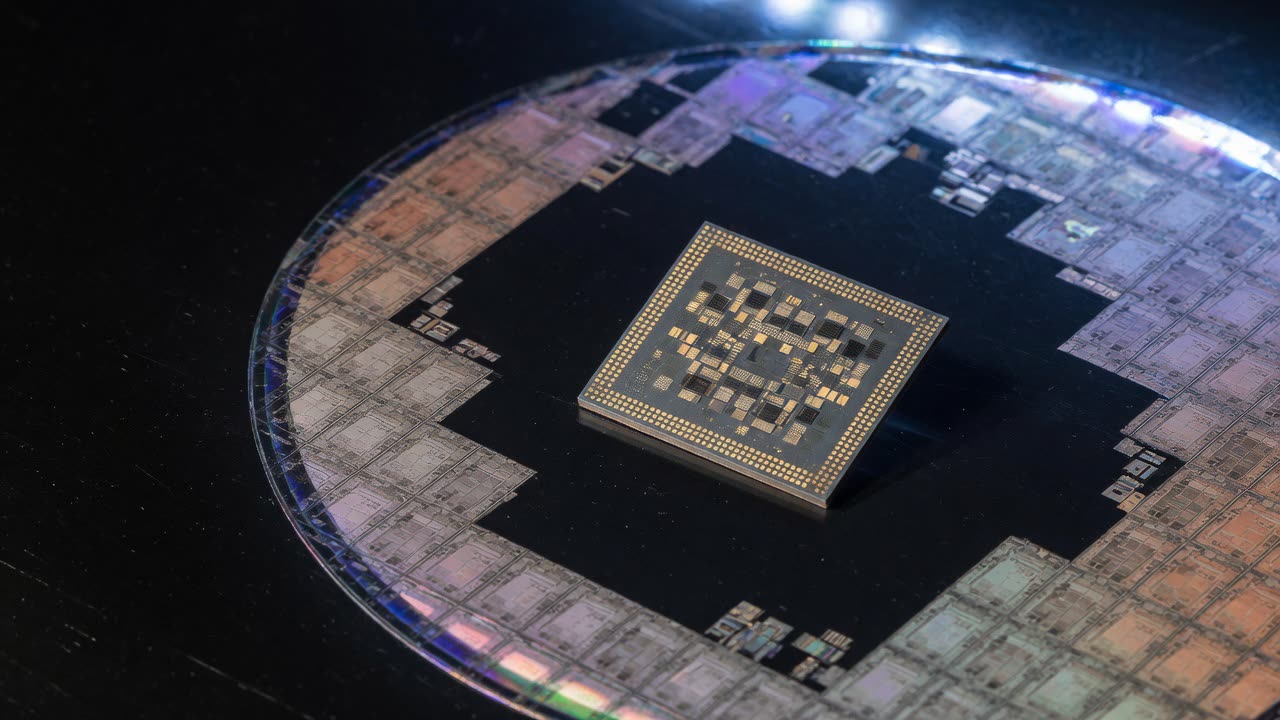
Every edge-AI chip is sold on one number: TOPS. It’s close to useless for choosing one. In 2026 the market spans MCU-class accelerators under a watt to 275-TOPS modules pulling 60 watts, and the right pick is decided by the workload you actually run, the power you can spend, and — often decisively — the model-optimization work your team can maintain. This is the selection framework we use in feasibility studies, with the 2026 parts as worked examples.
Key takeaways
- Edge AI silicon splits into three classes: MCU-class accelerators (0.5–2 TOPS, <1 W), dedicated NPUs (2–40 TOPS, 1–5 W), and edge SoCs/GPUs (up to 275 TOPS, 10–60 W).
- Performance-per-watt, not raw TOPS, is the decisive spec for battery products: the Hailo-8 delivers 26 TOPS at 2.5 W (~10 TOPS/W) versus Jetson AGX Orin’s 275 TOPS at up to 60 W.
- Memory bandwidth and on-chip SRAM often bound real throughput more than compute — and the model-optimization work a part demands is a hidden cost that decides many programs.
The three silicon classes, and why TOPS misleads
| Class | Envelope | Best for |
|---|---|---|
| MCU-class accelerator | 0.5–2 TOPS · <1 W | Wake words, anomaly triggers, simple gestures — always-on on coin cells |
| Dedicated NPU | 2–40 TOPS · 1–5 W | Real-time vision and multi-sensor models at battery-friendly power |
| Edge SoC / GPU | 8–275 TOPS · 10–60 W | Multiple concurrent models, rich OS, heavy multimodal pipelines |
Why performance-per-watt is the spec that matters
The bottleneck nobody puts on the box: memory
The 2026 parts, matched to jobs
| Part | Rough spec | Where it fits |
|---|---|---|
| Google Coral Edge TPU | 4 TOPS · 2 W · INT8 TFLite | Lightweight vision (MobileNet, EfficientDet-Lite) at very low power, models that fit TPU memory |
| Hailo-8 | 26 TOPS · 2.5 W · on-die memory | Always-on vision where power is decisive; best TOPS/W in class |
| Qualcomm RB5 / Snapdragon | ~15 TOPS + 5G | Connected products needing AI plus cellular in one platform |
| NVIDIA Jetson AGX Orin | up to 275 TOPS · 15–60 W | Robotics, multi-camera, heavy or multiple concurrent models — with the power budget to match |
A selection process you can run in a week
- Profile the workload first. Model architecture, input resolution, required frames or inferences per second, and the latency ceiling. This is the spec sheet; the silicon serves it, not the reverse.
- Set the power and thermal envelope. Battery capacity, duty cycle, and — for sealed enclosures — the sustained watts your thermal design can shed. This often eliminates whole classes before you compare parts.
- Size the memory. Working-set vs on-chip SRAM vs DRAM bandwidth. Prefer parts where your model lives on-chip.
- Cost the toolchain, not just the chip. Can your team quantize, compile and maintain models for this part? Vendor SDK maturity is a schedule risk.
- Benchmark on target, as a phase gate. Real tokens or frames per second, memory high-water mark, thermal steady-state and accuracy on the actual board — pass/fail at EVT, the same evidence discipline as every subsystem in hardware development.
Pick the smallest silicon that clears your workload — then spend the savings on the model.
The bottom line
- Three classes, three jobs: MCU-class accelerators for always-on triggers, NPUs for battery-friendly vision, edge SoCs/GPUs for heavy or concurrent models — pick the smallest class that clears the workload.
- Buy performance-per-watt, not peak TOPS: Hailo-8’s ~10 TOPS/W ships battery products that a 275-TOPS, 60-W module can’t.
- Memory bandwidth and toolchain maturity decide more programs than compute — benchmark your model on the actual board before you commit.
Frequently asked questions
What is the difference between an NPU, an edge SoC, and an MCU accelerator?
Is TOPS a good way to compare edge AI chips?
Which edge AI accelerator has the best performance per watt in 2026?
Why does memory bandwidth matter for edge AI inference?
How do I choose AI silicon for a battery-powered product?
Sources
- NeuralCoreTech — Edge AI Hardware 2026: On-Device Intelligence, Architecture & Chip Comparison · verified 23 July 2026
- Hailo — Hailo-8 AI Accelerator for Edge Devices · verified 23 July 2026
- TechnoLynx — Embedded Edge Devices for CV Deployment: Jetson vs Coral vs Hailo vs OAK-D · verified 23 July 2026
- Promwad — How to Choose the Best Edge AI Platform: Jetson, Kria, Coral and Others · verified 23 July 2026
- AIMultiple — Top 15 Edge AI Chip Makers with Use Cases in 2026 · verified 23 July 2026
- Promwad — Embedded AI Hardware Platforms 2026: Edge SoCs, NPUs, and MCU-Class Accelerators · verified 23 July 2026
- TechStoriess — 7 Best Edge AI Chips for IoT Devices (2026) · verified 23 July 2026
If the product has to ship, talk to the team that builds for that outcome.
Senior engineer on the first call. NDA before technical detail. References available under NDA after qualification. Or start with a fixed-fee feasibility study.